
Disc Pain Treatment
Disc pain can come on slowly with age, or all at once when you lift something the wrong way. At our Bell Road office, Dr. Chris Campo starts by finding out which disc is involved and whether it's pressing on a nerve. He knows how frustrating a long recovery can be. A serious ankle injury put him through one, and it's a big part of why he became a chiropractor.
For most disc patients, he uses gentle methods like the drop table and the Activator, which take very little force. Spinal decompression may also help by easing pressure on the disc so you can move more comfortably.
What is a spinal disc?
A spinal disc is a soft cushion that sits between the bones of your spine. Discs absorb shock and let your back bend and twist.
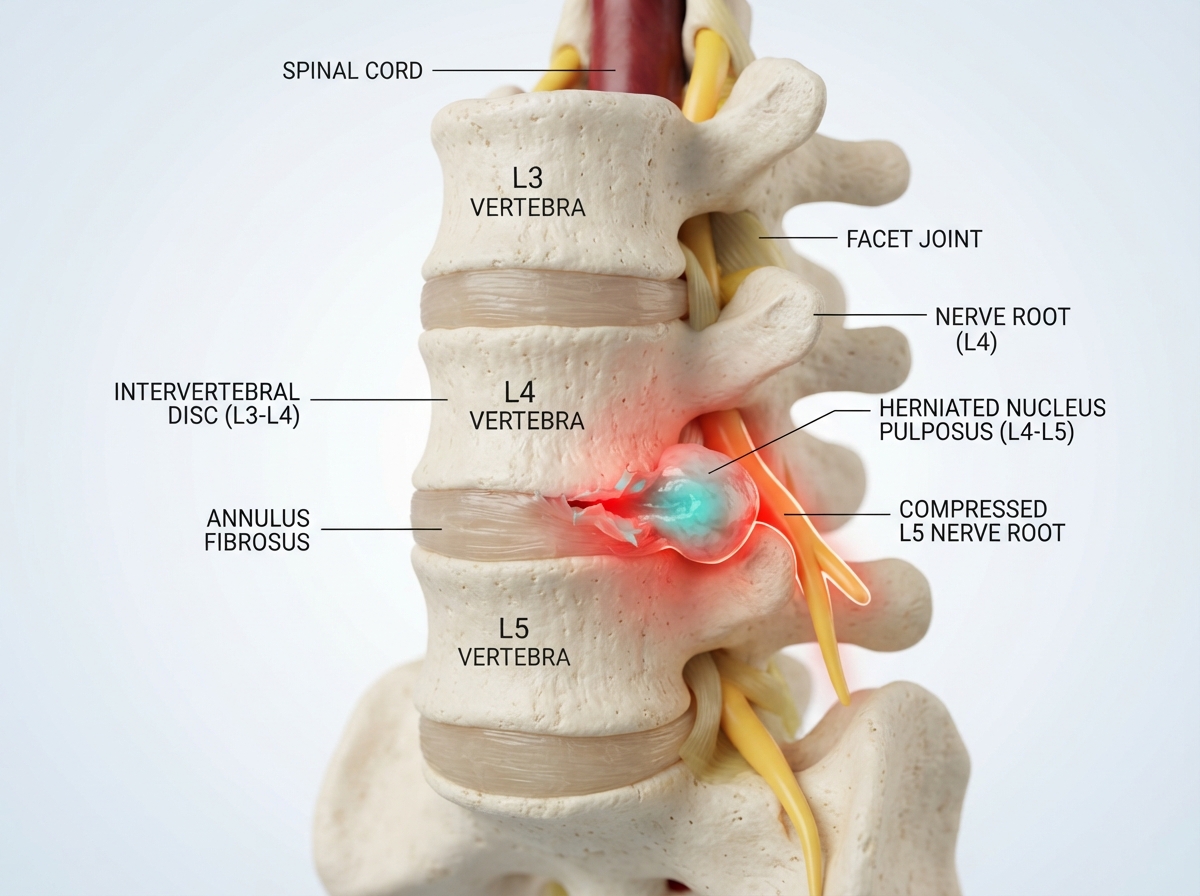
Each one has a soft, gel-like center inside a tougher outer ring. When that outer ring weakens or tears, the center can push out and irritate a nearby nerve.
How Dr. Chris and Meradith Work Together on Disc Pain
When a disc bulges or tears, the tissue around it often gets inflamed. That inflammation can keep a nerve irritated even after the disc itself starts to settle. It's one reason some disc pain hangs on longer than people expect.
Dr. Chris works on how your spine moves. If your pain keeps flaring up between visits, he may suggest you see Meradith McCortney, FNP-BC, our nurse practitioner, in the same office. She can order lab work to check things like vitamin D and signs of inflammation. Based on your results, she may recommend IV therapy or peptides, which may help with recovery.
For a bad flare-up, Meradith can talk with you about short-term pain medicine, such as Toradol or dexamethasone. Toradol is only used for a few days at a time. The two of them stay in touch about how you're doing, so you don't have to repeat your story or wait weeks for a referral.
What Causes Disc Pain
Discs lose some water and give as we age, so a little wear is normal by middle age. Years of slouching at a desk or lifting with your back instead of your legs can speed that up. Sometimes it's one moment, like a fall or a car accident. Pain usually starts when a bulging or herniated disc presses on a nerve.
What's the difference between a bulging disc and a herniated disc?
The disc shifts outward slightly but the outer layer remains intact. It may cause pressure on nearby nerves.
The soft inner material pushes through a tear in the outer layer. This often creates more significant pain, numbness or tingling.
Understanding Disc Pain & Care
Can chiropractic help disc pain?
It may. When the joints around a disc stop moving well, the muscles tighten and the nerve gets more irritated. Dr. Chris uses gentle adjustments to get those joints moving again, which may ease pressure and help you move more comfortably.
Not sure it's your disc? See how a herniated or bulging disc feels compared with pain that radiates down your leg.
Is chiropractic safe for herniated discs?
For many people, yes, but every disc problem is different. Before any treatment, Dr. Chris goes over your health history and does a hands-on exam. If he needs a clearer picture, he'll order imaging. If chiropractic isn't a good fit for your disc, he'll tell you and point you to the right specialist.
How quickly will I feel relief from disc pain?
It depends on the disc and how long it's been bothering you. Some patients feel better after a visit or two, especially when the problem is new. A disc that has hurt for months usually takes longer. Dr. Chris will give you an honest estimate after your exam and change your plan as he sees how you respond.
Will I need surgery if I have disc pain?
Most people with disc pain don't need surgery. Chiropractic care and other non-surgical treatment are usually tried first, and surgery is usually considered only if pain doesn't improve or nerve problems get worse. If you lose control of your bladder or bowels, or you have leg weakness that's getting worse, go to the emergency room right away.
Can a chiropractor make a herniated disc worse?
It's uncommon. Before any treatment, Dr. Chris examines you to make sure your disc problem is a good fit for chiropractic care. He uses gentle techniques that take very little force, and he'll refer you for imaging or to a specialist if you need it.